

Start here
What Lighting Layers Actually Mean
Build the base
Ambient Lighting: The Foundation
Add function
Task Lighting: Purposeful and Practical
Add personality
Accent Lighting: The Detail That Changes Everything
Apply it
Putting It All Together on a Real Budget
What Lighting Layers Actually Mean
Walk into a room that feels immediately comfortable and inviting, and there's a good chance the lighting is doing quiet but important work. Walk into one that feels flat, harsh, or oddly gloomy despite having a ceiling fixture — and lighting is probably the culprit there too.
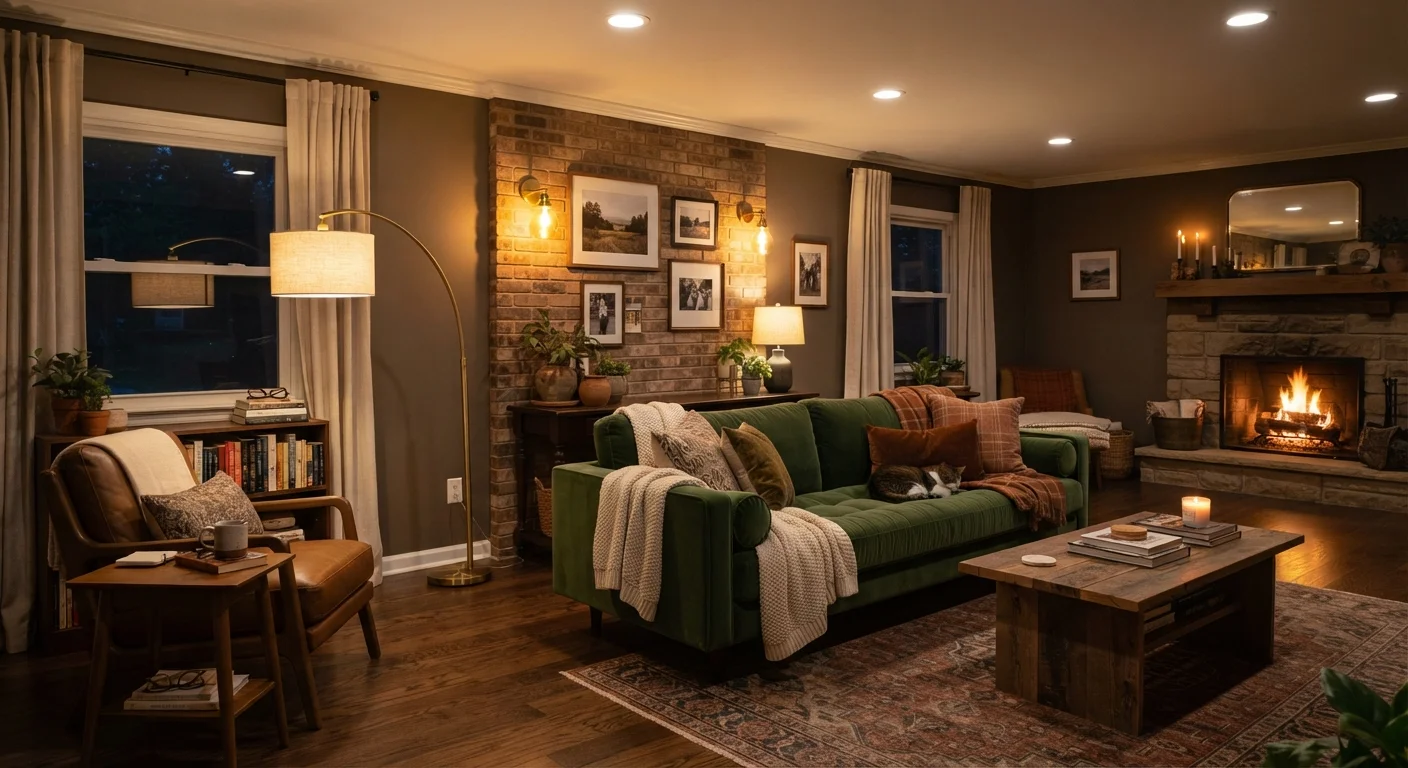
The concept of lighting layers refers to using multiple types of light sources together, each serving a distinct role. Interior designers have relied on this approach for decades because it mirrors how natural light actually behaves: it comes from multiple directions, varies in intensity, and changes throughout the day.
The three core layers are ambient (general illumination), task (focused, functional light), and accent (decorative, directional light). A room with only one overhead fixture has ambient light — and nothing else. That's the functional equivalent of painting a room a single flat color and calling it done. As explored in our guide on common decorating missteps, poor lighting is one of the most frequently overlooked reasons a room feels off.
Ambient lighting
The general, overall illumination of a room that allows you to see and move around safely. It's the base layer of any lighting plan.
Task lighting
Focused light aimed at a specific area where an activity happens, like reading, cooking, or working. It reduces eye strain and improves function.
Accent lighting
Directional light used to highlight a specific object, surface, or feature — such as artwork, shelving, or an architectural detail.
Color temperature
A measure of how warm or cool a light source appears, expressed in Kelvin (K). Lower numbers (2700K–3000K) produce warm, yellowish light; higher numbers (4000K+) produce cooler, bluish-white light.
Dimmer switch
A wall control that lets you adjust the brightness of a light fixture rather than simply switching it on or off. It gives you control over mood and light intensity.
Uplighting
A technique where a light source is placed low and directed upward, often to illuminate a wall or ceiling and create the illusion of greater height or space.
Ambient Lighting: The Foundation
Ambient lighting is your room's baseline illumination — the light that allows you to move around safely and see the space in full. In most American homes, this comes from a ceiling-mounted fixture, recessed can lights, or a ceiling fan with a light kit.
The problem isn't ambient light itself; it's relying on it exclusively. A single overhead source casts light straight down, creating harsh shadows on faces, emphasizing ceiling height over wall depth, and flattening the visual texture of furniture and decor.
The fix starts with control. Adding a dimmer switch to your overhead fixture lets you dial ambient light down in the evening, so it becomes a supporting player rather than a spotlight. Pair that with warmer-toned bulbs — look for 2700K to 3000K on the packaging — and your ambient layer becomes much more livable. Color temperature plays a bigger role than most people realize; our article on color temperature in home décor goes deeper on why bulb warmth can transform a room's entire feel.
Dimmer Switches: Biggest Bang for Your Buck
If you can only make one change to your room's lighting, install a dimmer switch on the overhead fixture. Most standard dimmer switches are designed for DIY installation and don't require an electrician. However, if you're unsure about your home's wiring or the switch controls multiple circuits, consult a licensed electrician before proceeding.
Task Lighting: Purposeful and Practical
Task lighting delivers focused illumination exactly where you need it — over a reading chair, above a kitchen counter, beside a bathroom mirror, or on a desk. It reduces eye strain and makes functional activities genuinely easier.
In a living room, a table lamp beside a sofa or a floor lamp angled over a reading nook qualifies as task lighting. In a kitchen, under-cabinet lighting that illuminates the countertop is a classic example. Bedside lamps serve double duty as both task and ambient light when overhead fixtures are switched off.
Task lighting doesn't have to be expensive or require an electrician. Plug-in floor lamps, rechargeable clip-on lights, and battery-powered under-cabinet strips are all practical solutions for renters and homeowners who want to add function without rewiring. The key is placement: position task lights so the light source itself isn't directly in your line of sight, which causes glare. For more on how furniture positioning and lighting work together, see our furniture arrangement principles.
Accent Lighting: The Detail That Changes Everything
Accent lighting is the layer most homeowners skip — and skipping it is exactly why so many rooms feel competent but not compelling. Its purpose is to draw the eye to something specific: a piece of artwork, a built-in bookshelf, a textured wall, an architectural feature like a fireplace surround.
Directional track lighting, picture lights mounted above framed art, small spotlights inside display shelving, and even string lights tucked along a ceiling beam all function as accent lighting. The contrast created — a brighter focal point against a slightly dimmer background — adds visual depth that no amount of furniture rearranging can replicate on its own.
Accent lighting pairs naturally with intentional focal-point design. If you've ever considered whether an accent wall might anchor your room, combining it with directional lighting aimed at that wall is one of the most effective ways to make both elements work harder.
Don't Overlook Wattage and Fixture Ratings
When adding accent lighting inside enclosed shelving or near flammable materials like curtains, pay attention to the heat output of the bulb and the fixture's maximum wattage rating. LED bulbs run significantly cooler than incandescent bulbs and are the safer choice for tight or enclosed spots. Never exceed a fixture's rated wattage — doing so is a fire hazard.
Putting It All Together on a Real Budget
Layered lighting doesn't require a renovation or a designer. The goal is to audit what you already have and identify which layers are missing.
- Start with your overhead: Add a dimmer and swap bulbs to a warmer color temperature. This single change costs under $30 in most cases and immediately softens ambient light.
- Add at least one task source: A table lamp or plug-in floor lamp fills this role without any electrical work.
- Introduce one accent element: A picture light, a small uplight behind a plant, or a spotlight inside a bookcase counts. Even a candle grouping on a side table creates a modest version of this effect.
Once you have all three layers in place, experiment with which ones you use simultaneously. A dimmed overhead combined with a warm table lamp and a lit bookshelf creates an entirely different atmosphere than full overhead plus task lighting alone. That flexibility — the ability to shift a room's mood without moving a single piece of furniture — is the real payoff of layered lighting.
In smaller rooms, thoughtful lighting becomes even more important. Our guide to decorating a small living room covers how light placement can make compact spaces feel genuinely larger and more comfortable.
Lighting Layout Planner
A room diagram tool that helps you map out where ambient, task, and accent sources should go before you buy anything. Useful for visualizing gaps in your current setup.
Bulb Color Temperature Guide
A reference guide explaining the Kelvin scale and which color temperatures work best in different rooms and for different activities.
DIY Dimmer Switch Installation Guide
A step-by-step walkthrough of how dimmer switches work and what to check before attempting installation, including when to call a licensed electrician.
Frequently Asked Questions
Not necessarily. Many lighting layers can be added with plug-in floor lamps, table lamps, and battery-operated puck lights — no wiring required. For hardwired fixtures like recessed lighting or ceiling-mounted sconces, consult a licensed electrician.
Most interior designers suggest a minimum of three to four light sources in a living room. This typically means one ambient source, one or two task sources, and at least one accent source to create depth and visual interest.
For living rooms, warm white bulbs in the 2700K–3000K range are generally recommended. They produce a cozy, flattering glow that complements relaxation. Cooler temperatures work better in kitchens and offices.
Yes. Uplighting, wall sconces, and lamps placed at eye level draw the eye around the room and reduce shadow, making spaces feel larger. Avoid lighting that pools only in the center — it makes edges feel dark and cramped.
Adding a dimmer switch to an existing overhead fixture is one of the simplest, most affordable improvements you can make. It gives you control over mood and reduces the harsh single-source effect immediately.
Accent lighting is primarily decorative — it highlights architectural features, art, or objects you want noticed. But it also adds warmth and depth to a room, which contributes to overall comfort and visual balance.
The content on this site is for informational purposes only and is not a substitute for professional advice. Always consult a qualified professional for guidance specific to your situation.