

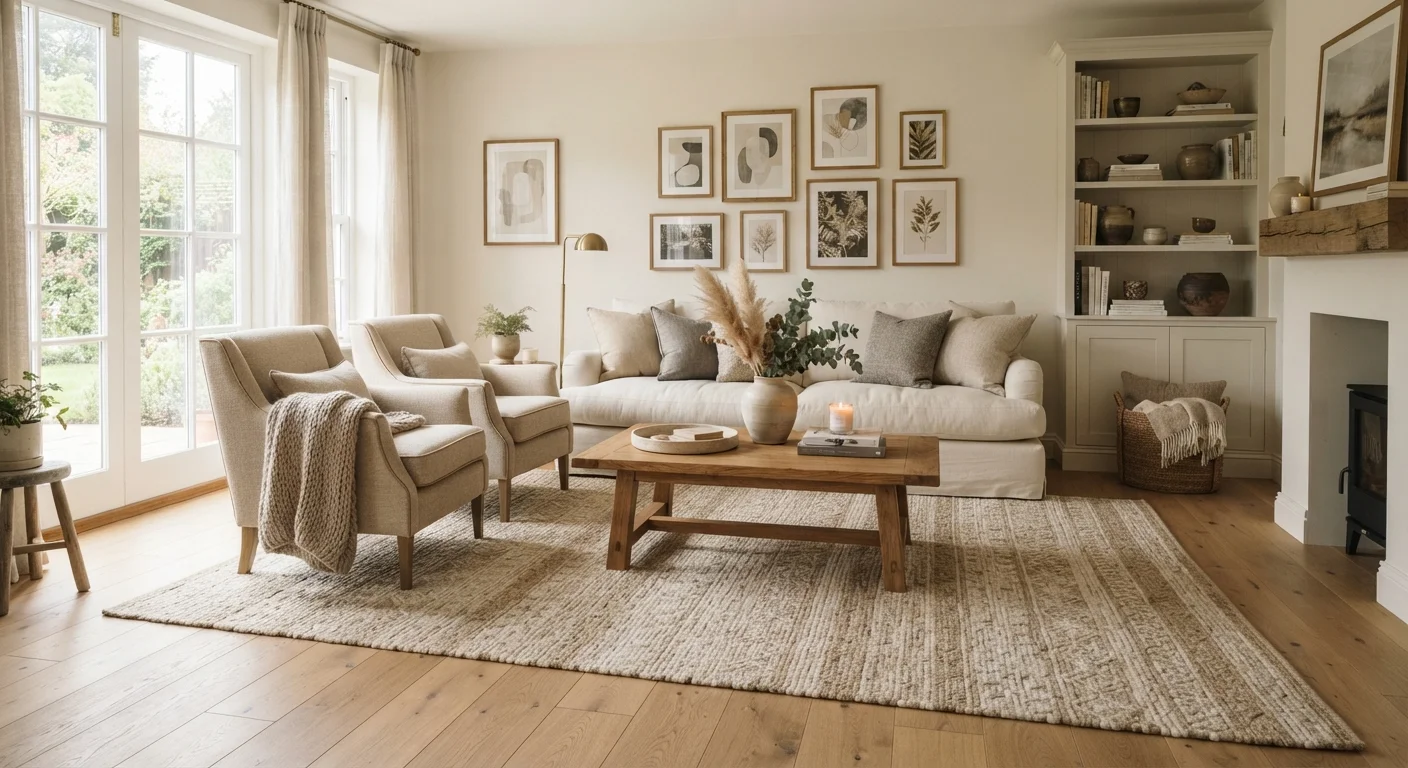
Why Rug Size Is a Decorating Foundational Decision
A rug does more than cover flooring — it defines a zone, anchors furniture, and signals where a room's main activity takes place. When it's the wrong size, even a thoughtfully arranged room can feel unsettled or incomplete. That's because the rug acts as a visual frame: too small and the furniture floats; too large and the room loses its breathing room.
This is consistently one of the most correctable missteps in home decorating, and it's covered in depth in our guide on common decorating missteps that are easy to fix. Before you buy, measure — and then measure again.
~18"
Minimum border between rug edge and wall
Interior designers consistently cite 18–24 inches of exposed floor as the standard margin for most residential rooms.
8×10 ft
Most commonly recommended living room rug size
Home furnishing retailers and designers widely identify the 8×10 as the most versatile and frequently needed size in average American homes.
Standard Rug Sizes and What They Work For
Area rugs are sold in a handful of common dimensions. Understanding what each is designed for removes a lot of guesswork:
- 2×3 ft: Accent or entryway mat — not suitable for furniture groupings.
- 4×6 ft: Works under a coffee table in a very small seating area, or as a bedroom accent beside a twin or full bed.
- 5×8 ft: Fits smaller living rooms or apartment spaces; front legs of furniture should still reach it.
- 8×10 ft: The most versatile size — appropriate for a standard living room or master bedroom.
- 9×12 ft: Suited to larger rooms or open-plan spaces where you want all furniture legs on the rug.
- Custom/runner: Hallways and galley kitchens typically call for runners in proportions like 2.5×8 or 3×10 ft.
When in doubt, size up. A rug that feels slightly large in the store will read correctly once furniture is on it.
Sizing for Each Room Type
Living Room
The standard guidance for a living room is that the rug should be large enough so that at minimum the front two legs of your sofa and any flanking chairs rest on it. This connects the seating group visually. If your budget and floor space allow all four legs of each piece on the rug, that creates an even more cohesive look — but it isn't required.
Dining Room
Here the rule is simpler: the rug must be large enough that chairs remain on it when pulled out. A chair pulled back for seating typically travels 18–24 inches from the table. Measure your table, add roughly 24 inches on each side, and that's your minimum rug size. For a standard 36×72-inch rectangular dining table, an 8×10 ft rug is typically the smallest workable option.
Bedroom
The most common approach is to place a rug that extends at least 18–24 inches beyond each side of the bed. For a queen bed, an 8×10 ft rug usually works well; for a king, consider a 9×12 ft. Alternatively, a runner on each side of the bed creates a similar effect at lower cost — useful in smaller spaces that need to feel comfortable without clutter.
When sizing a bedroom rug, prioritize the sides where people step out of bed rather than coverage under the bed frame itself. Your feet land at the sides — that's where warmth and comfort actually matter.
A significant portion of rug coverage often disappears under the bed, making expensive large rugs an inefficient spend if all you need is bedside comfort.
Tape out your rug's footprint with painter's tape before you buy anything. Even experienced decorators use this trick because the visual difference between an 8×10 and a 9×12 is dramatic once furniture is in place.
Rug returns are costly and inconvenient; a few minutes of taping can prevent a purchase decision you'll regret the moment you unroll the rug at home.
Placement Rules That Actually Work
Placement is as important as size. Follow these spatial principles for a polished result:
- Leave a border of bare floor. In most rooms, leave 18–24 inches of exposed floor between the rug's edge and the wall. This border acts like a mat around a picture — it gives the rug room to read as a deliberate design element.
- Center on the furniture grouping, not always the room. In an open-plan space, the rug should be centered under the seating group rather than mathematically centered in the room.
- Keep it parallel. Unless you're deliberately angling a rug for effect, align it parallel to the dominant wall or flooring pattern. Diagonal placement works in some rooms but requires more visual confidence to pull off.
- Use painter's tape first. Before buying, tape out the rug's footprint on your floor. Live with it for a day. This single step prevents the most expensive sizing mistakes.
For a deeper look at how rug placement interacts with traffic flow and seating, see our guide to furniture arrangement principles.
Tape Before You Buy
Use painter's tape to outline your intended rug dimensions directly on the floor before purchasing. Arrange your furniture as you plan to use it, then assess the taped boundary. This costs nothing and eliminates the most common and expensive sizing errors.
Layering Rugs for Texture and Depth
Layering — placing a smaller rug over a larger base rug — has moved firmly into mainstream decorating. It's a particularly budget-friendly technique because it lets you anchor a large area with an inexpensive flatweave or sisal rug and add pattern or texture with a smaller, more decorative piece on top.
A few principles make layering work:
- Contrast textures. Pair a flat, low-pile base (jute, sisal, or cotton flatweave) with a higher-pile or patterned top rug. Stacking two similar textures tends to look accidental.
- Offset the layers visually. The top rug should be noticeably smaller — typically at least 2 feet shorter on each dimension — and positioned slightly off-center or at an angle for a relaxed feel.
- Keep patterns in check. If your top rug is boldly patterned, a solid or subtly textured base works best. This principle ties into the broader advice in mixing patterns without visual chaos.
- Use a rug pad under the base layer. It prevents slipping and protects both rugs and flooring.
Common Mistakes and How to Avoid Them
Even with good intentions, a few errors come up repeatedly:
The Floating Furniture Trap
Placing a rug that only fits under the coffee table — leaving all sofa and chair legs on bare floor — is the most frequently seen rug error in American living rooms. It creates the visual impression of furniture adrift on an island. Always ensure at least the front legs of your major seating pieces rest on the rug to tie the grouping together.
- Going too small
- A rug that only fits under the coffee table — with all seating legs floating on bare floor — makes the room feel disconnected. Size up before you size down.
- Centering in the room instead of under the furniture
- In a living room with furniture positioned away from one wall, the rug should follow the seating group, not split the room's square footage evenly.
- Skipping the rug pad
- A rug pad adds cushion and, more critically, prevents slipping — especially on hardwood and tile. It also extends the rug's life by reducing friction.
- Ignoring the room's traffic flow
- A rug that blocks a natural walkway will constantly get shifted or curled at the corner. Plan the rug footprint around how people actually move through the space. Our room planning checklist walks through these layout considerations before you spend anything.
Getting the rug right is one of the highest-leverage decorating decisions you can make. It doesn't require a large budget — it requires careful measurement and a clear understanding of how the piece will interact with everything around it.
The content on this site is for informational purposes only and is not a substitute for professional advice. Always consult a qualified professional for guidance specific to your situation.